Get more plumbing jobs — not just more leads.
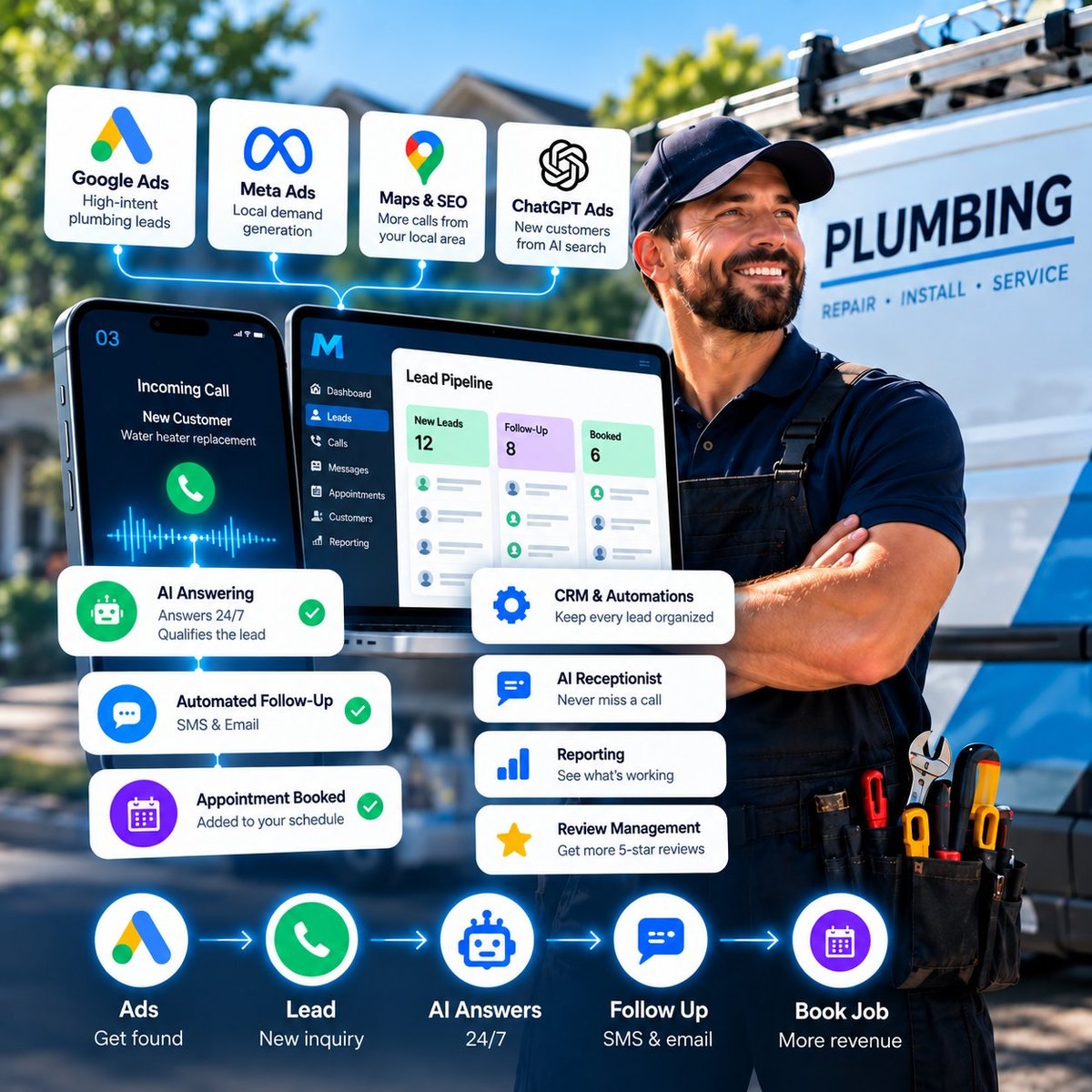
Modern PPC combines paid advertising, AI call answering, automated follow-up and CRM into one system designed to turn more plumbing opportunities into booked jobs.
Free strategy call • No obligation • Built for plumbers
Google Ads • Meta Ads • LSA • Local SEO • Google Maps • AI Receptionist • Automated Follow-Up • CRM
Free strategy call • No obligation • Built for plumbers
Google Ads • Meta Ads • LSA • Local SEO • Google Maps • AI Receptionist • Automated Follow-Up • CRM
$30M+
Paid Media Spend Managed
10+ Years
Paid Media Experience
60+
Brands Managed
Plumbing-Focused
Growth System
Deep paid media experience across 60+ brands — applied through a growth system built specifically for plumbing companies. That track record spans brands well beyond plumbing.
See how Modern PPC works
More leads don’t automatically mean more booked jobs.
See how Modern PPC connects advertising, lead response, automated follow-up, booking, reviews, and reactivation into one customer acquisition system built specifically for plumbing companies.
Watch the 75-second overview.
Ready to see where your biggest opportunity is?
Get My Free Plumbing Growth PlanFree, no obligation — plumbing companies only.
When the phone rings
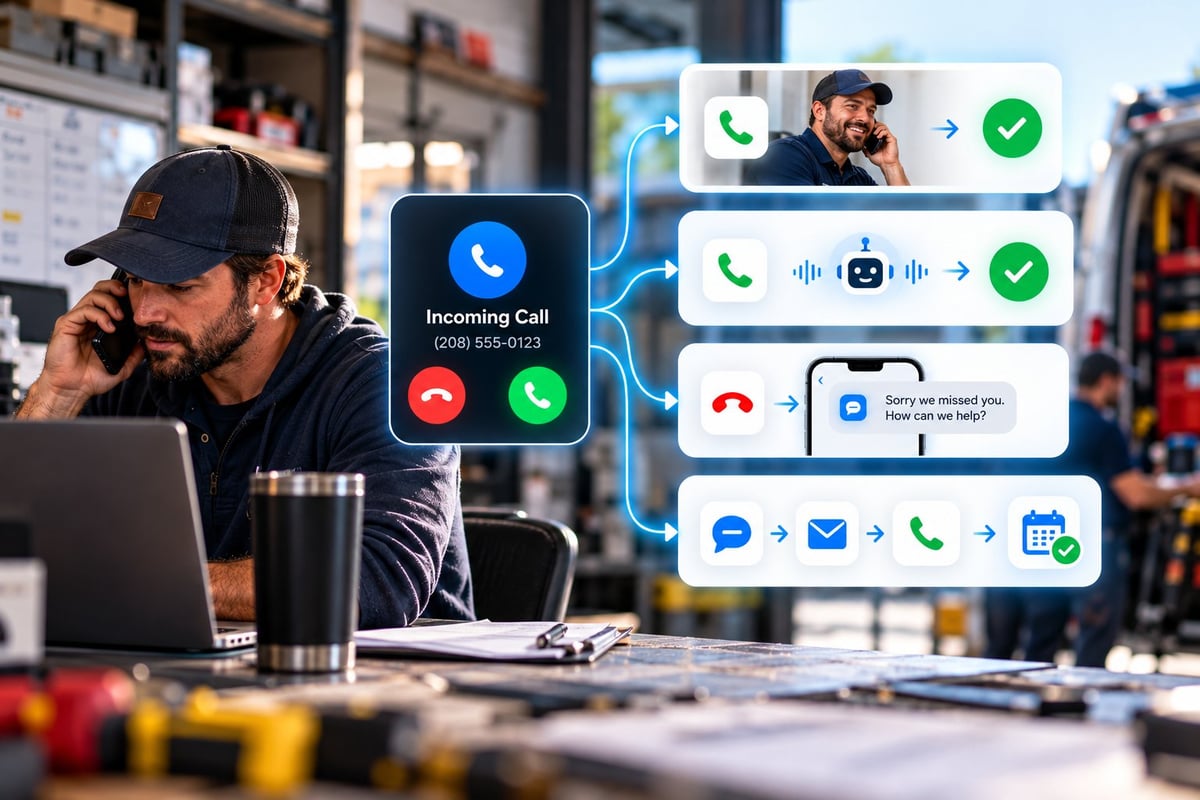
Every lead gets a next step.
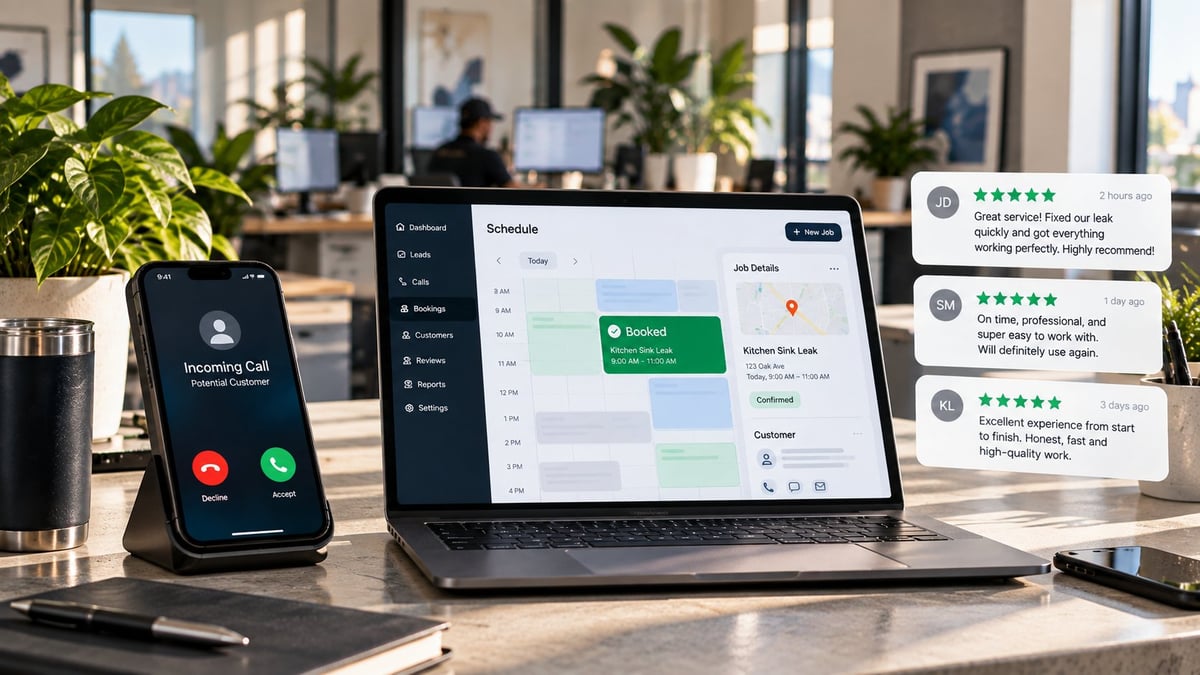
Generating the opportunity is only the beginning. The system helps keep the conversation moving when your team can’t respond immediately.
Your team answers
The call routes normally to your team.
Your team is busy
AI can answer, capture the need, and help move the conversation forward.
Nobody answers
Missed-call text back can begin the follow-up automatically.
They don't book yet
Automated follow-up keeps working the opportunity.
Want to see how each of those pieces actually works?
See how the growth system worksWhy Modern PPC
One team responsible for as much of the journey as you need.
Lead generation is a legitimate place to stop — plenty of our longest-standing clients buy exactly that, and do very well on it. What we add is the choice: when you're ready to own more of the journey, the same team and the same system already extend past the handoff.
Lead generation
- Ad
- Lead
- Handed off
Your team takes it from there — a complete engagement on its own.
The full growth system
- Ad
- Lead
- Answer
- Follow up
- Book
- Review
- Repeat
The same starting chain, carried further — answering, follow-up and booking handled by the team already generating the lead.
Every channel you need to be found in.
Google Ads · Google LSA · Meta · ChatGPT Ads
Google Ads
Capture homeowners actively searching for plumbing services.
Google LSA
Capture high-intent local service demand.
ChatGPT Ads
NewReach homeowners while they're researching and discussing plumbing problems through ChatGPT.
Explore ChatGPT AdsMeta Ads
Create and capture additional demand across Facebook and Instagram.
- Google Search + LSA + ChatGPT Ads + Meta
- Conversion landing pages
- Calls + forms + bookings
- CRM + automated follow-up
- Booked jobs
Why plumbing only
Specialization is the whole advantage.
An agency running campaigns for plumbers, dentists, and roofers at the same time rebuilds the same things from scratch every account. We don't. Because we work only with plumbing companies, the structure is already built — and every account after that makes the next one sharper.
We also won't pretend to have offices in every city. We work with plumbing companies across the United States, and we're straightforward about how we work.
Campaigns
Built around the split between emergency and planned work.
CRM workflows
Pipelines shaped around how plumbing jobs actually move.
Landing pages
Written for what homeowners search: no hot water, blocked drain, repipe.
Reporting
Measured against booked jobs and average ticket, not clicks.
Built for plumbing companies

Built for plumbing companies
A better fit for companies ready to build a growth system.
You want a more consistent source of new opportunities
You care about booked jobs — not just lead volume
You want faster answering and more consistent follow-up
You want to understand which marketing is actually producing customers
Probably not a fit if you’re simply looking for the cheapest possible lead source.
Your strategy call
We'll find the biggest constraint first.
You may not need more of everything. The first step is identifying where the biggest opportunity is being lost.
We look at acquisition — Google Ads, Meta, LSA, ChatGPT Ads, Maps, and SEO.
We look at answering, CRM, and follow-up.
We look at call tracking, lead tracking, and attribution.
You don’t need everything at once. You need to fix the right problem first.
Find my biggest growth gapPackages
Choose how much of the system you want us to manage.
Three levels, same system. What changes is how much of the journey we own — and every tier is built to be upgraded as it earns it.
Lead Generation
Generate more opportunities
+$1,500 one-time setup
First month: $3,500 + ad spend
Best for
For plumbing companies that already have a strong process for answering, following up, and closing.
Generate the opportunity.
Included Managed Ad Spend: up to $10,000/month
Book my free strategy callStandard management fee cap
$9,500/month maximum.
Growth System
Generate leads + turn them into booked jobs
+$3,500 one-time setup
First month: $8,500 + ad spend
Best for
For plumbing companies that want four paid acquisition channels managed as one system, plus a better process for turning leads into booked jobs.
Generate + convert.
Included Managed Ad Spend: up to $30,000/month
Book my free strategy callStandard management fee cap
$12,000/month maximum.
Market Domination
Build the complete plumbing growth engine
+$6,000 one-time setup
First month: $14,000 + ad spend
Best for
For plumbing companies that want the complete customer-acquisition system.
Acquire + convert + expand visibility.
Included Managed Ad Spend: up to $40,000/month
Book my free strategy callStandard management fee cap
$15,000/month maximum.
Advertising spend is separate.
Website & landing page design
Or start with the thing every lead lands on.
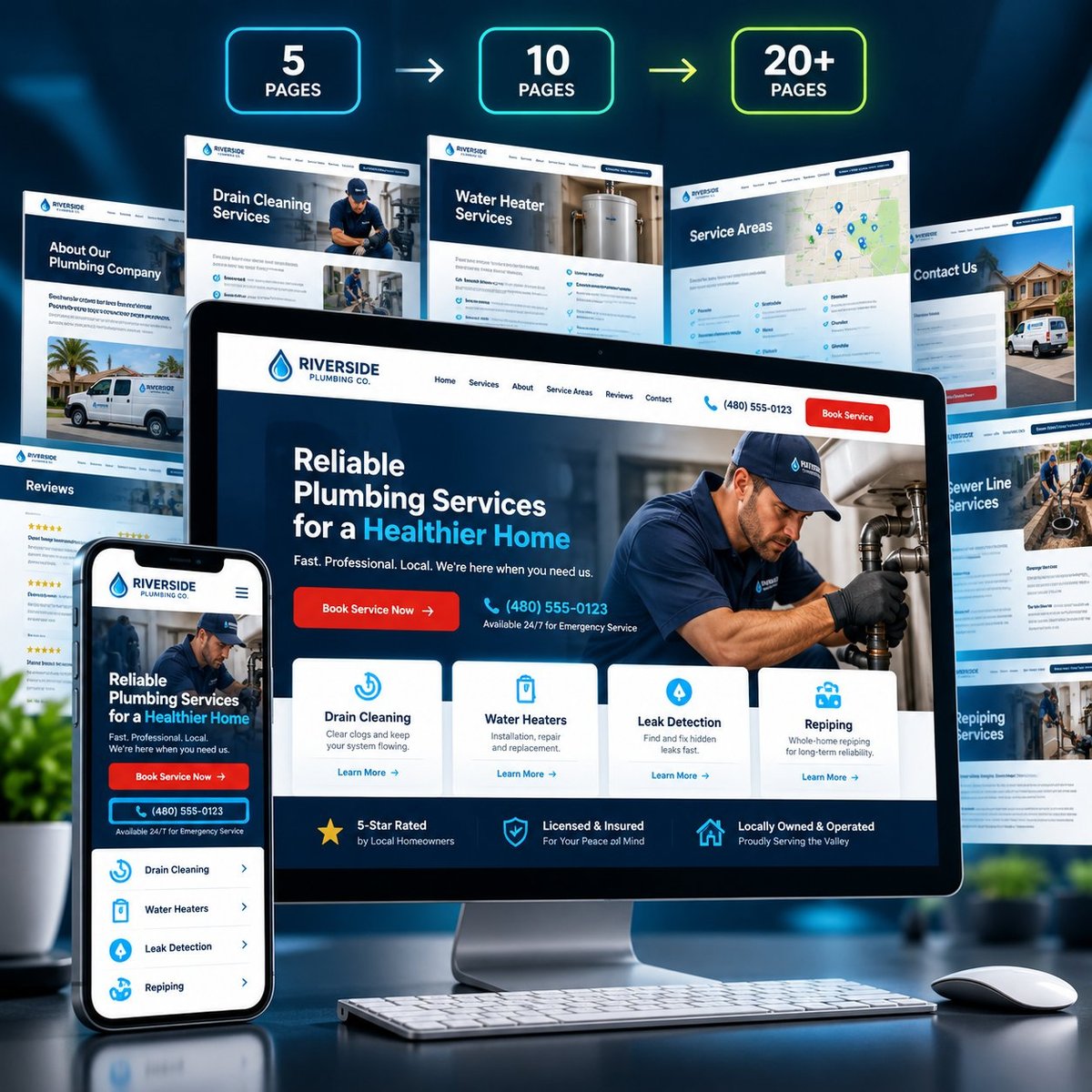
Paid traffic is only as good as the page it arrives on. We design and build conversion-focused plumbing websites and campaign landing pages as a one-time project — priced by page count, scoped to your services and the areas you cover.
- One-time project pricing
- Priced by page count
- CRM and tracking integration
- Campaign landing pages
Free growth plan
Get your free plumbing growth plan.
Tell us a little about your plumbing company and we'll identify where your biggest growth opportunities may be.
See how the system applies to your company
We'll walk through how our system would fit how you currently generate, answer and follow up with leads.
See how the system fits your company
We'll walk through what we do and how it would apply to how you currently generate, answer and follow up with leads.
A clear picture of what working together looks like
You'll know exactly what each package covers and what it costs, so you can decide for yourself.
The questions plumbing owners ask us.
Buying questions, answered plainly. For how the system works underneath, the system page goes deeper.
See how the system worksDo you only work with plumbing companies?
Yes. Plumbing is the only trade we work in, which is why the campaign structure, CRM workflows and landing page templates are already built rather than rebuilt for every account. We work with plumbing companies across the United States.
Do I need to use every Modern PPC service?
No. The packages exist precisely because companies arrive at different points — some need more opportunities, some need a better system for the ones they already get. We'll recommend the level that fits, and in some cases that means starting with less than you expected.
Is advertising spend included in the monthly fee?
No. The management fee is what we charge; advertising spend is paid directly by you to the advertising platforms and stays separate from it. The ad accounts stay yours. Each package includes a set amount of managed ad spend before any additional fee applies.
What happens on the strategy call?
We look at how you currently generate leads, how those leads are handled once they arrive, and where opportunities may be slipping. It's a working session rather than a pitch — you'll leave knowing what we'd fix first, whether or not you decide to work with us.
How long is the initial engagement?
It begins with a 90-day initial engagement. Building and optimizing a complete system takes enough time to launch, collect real lead and booking data, and tune the campaigns against it. After the first 90 days, service continues month-to-month with 30 days' written notice.
Can Modern PPC work with my existing team or systems?
Usually, yes. We'll look at the CRM and call handling you already have and at whether they can support the follow-up and tracking the system depends on. If they can, we'll work with them. If they can't, we'll tell you why — and upgrading stays your call, not a condition of working together.
Still deciding?Book a strategy call and we’ll walk through your current setup — no obligation.